Why Agency-Client Relationships Break Down, Even When the Work Is Good
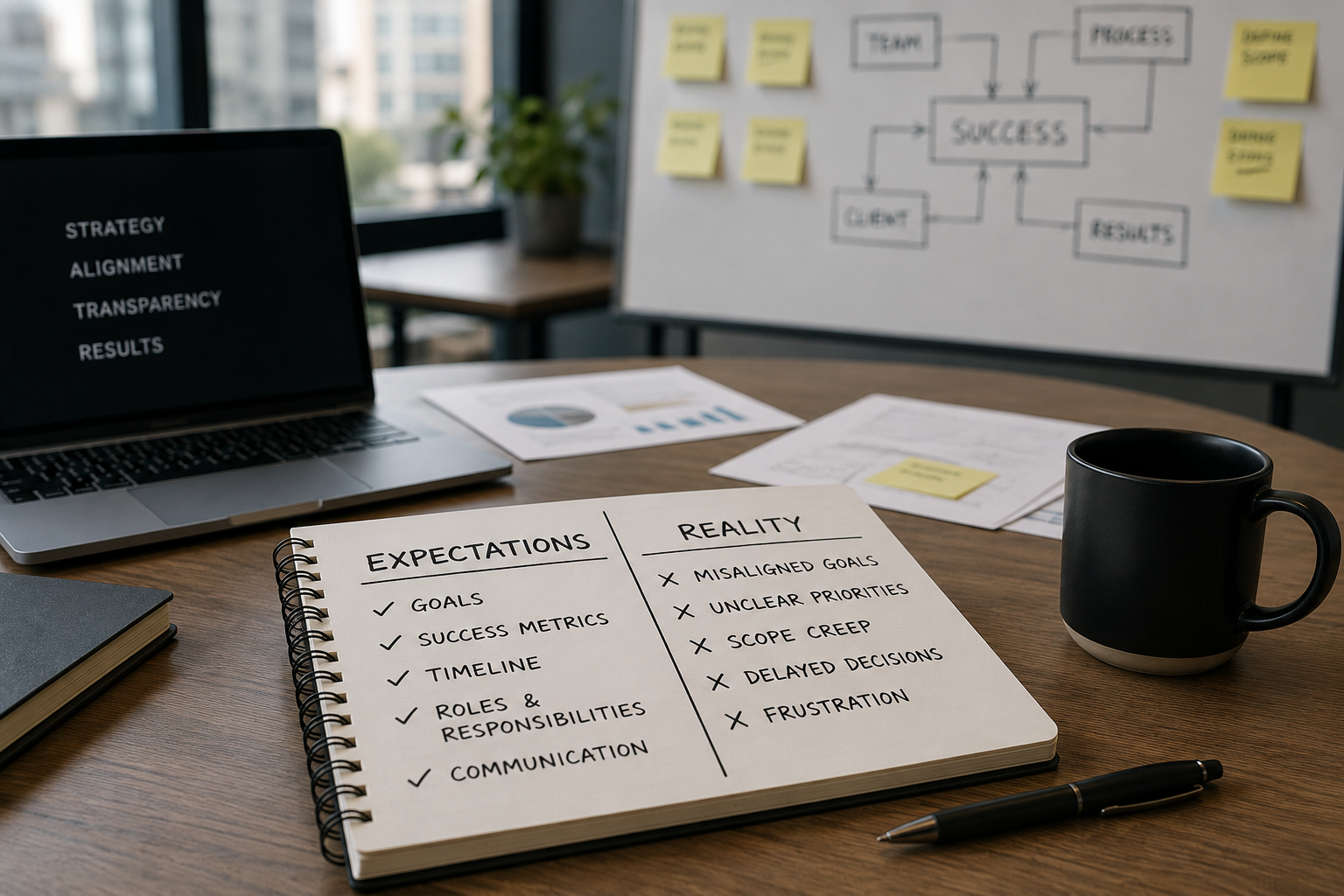
One of the most common misconceptions in our industry is that agency-client relationships fail because of poor execution. While missed deadlines, quality issues, and underperforming campaigns certainly create challenges, they are rarely the primary reason partnerships deteriorate.
Over the course of my career, I've worked on both sides of the relationship—inside organizations managing agencies and inside agencies serving clients. In both environments, I observed a similar pattern. Projects that struggled rarely suffered from a lack of talent. More often, they suffered from a lack of alignment. By the time frustrations become visible, the actual issue has usually existed for months. The relationship begins to break down not because of what was delivered, but because expectations, objectives, and responsibilities were never fully aligned before the work began.
Organizations often approach projects from different perspectives. Executive leadership may be focused on growth. Marketing teams may prioritize engagement and lead generation. Sales teams may be concerned with lead quality and conversion. Meanwhile, agencies are typically tasked with delivering a defined scope of work.
The problem arises when these perspectives are never consolidated into a shared definition of success. Each stakeholder assumes everyone is working toward the same goal when, in reality, success is being measured differently across the organization. As a result, projects can appear successful to one group and disappointing to another. In many cases, kickoff meetings focus heavily on deliverables, timelines, and budgets while dedicating far less attention to strategic alignment. Teams discuss what will be created before agreeing on why it is being created.
Without clearly defining objectives, success metrics, ownership, and decision-making authority, projects become vulnerable to shifting expectations. As new stakeholders become involved and priorities evolve, teams find themselves revisiting decisions that should have been settled early in the process. This creates friction, delays, and frustration that are often misinterpreted as execution problems.
The strongest partnerships I've been involved with begin by investing time in alignment. Before discussing creative concepts or project plans, everyone understands the business challenge being addressed and the outcomes the organization hopes to achieve. That alignment creates a foundation for better communication, faster decision-making, and stronger accountability throughout the project lifecycle. When expectations are clear, teams spend less time debating direction and more time creating value.
The best agency-client relationships are built on trust, transparency, and shared objectives. Great work is important, but great work alone cannot overcome a lack of alignment. Before beginning your next initiative, ask a simple question: What does success look like for everyone involved?
The answer may reveal opportunities to strengthen the partnership before challenges ever emerge.
