
Why Beautiful Design Doesn't Always Produce Better Results
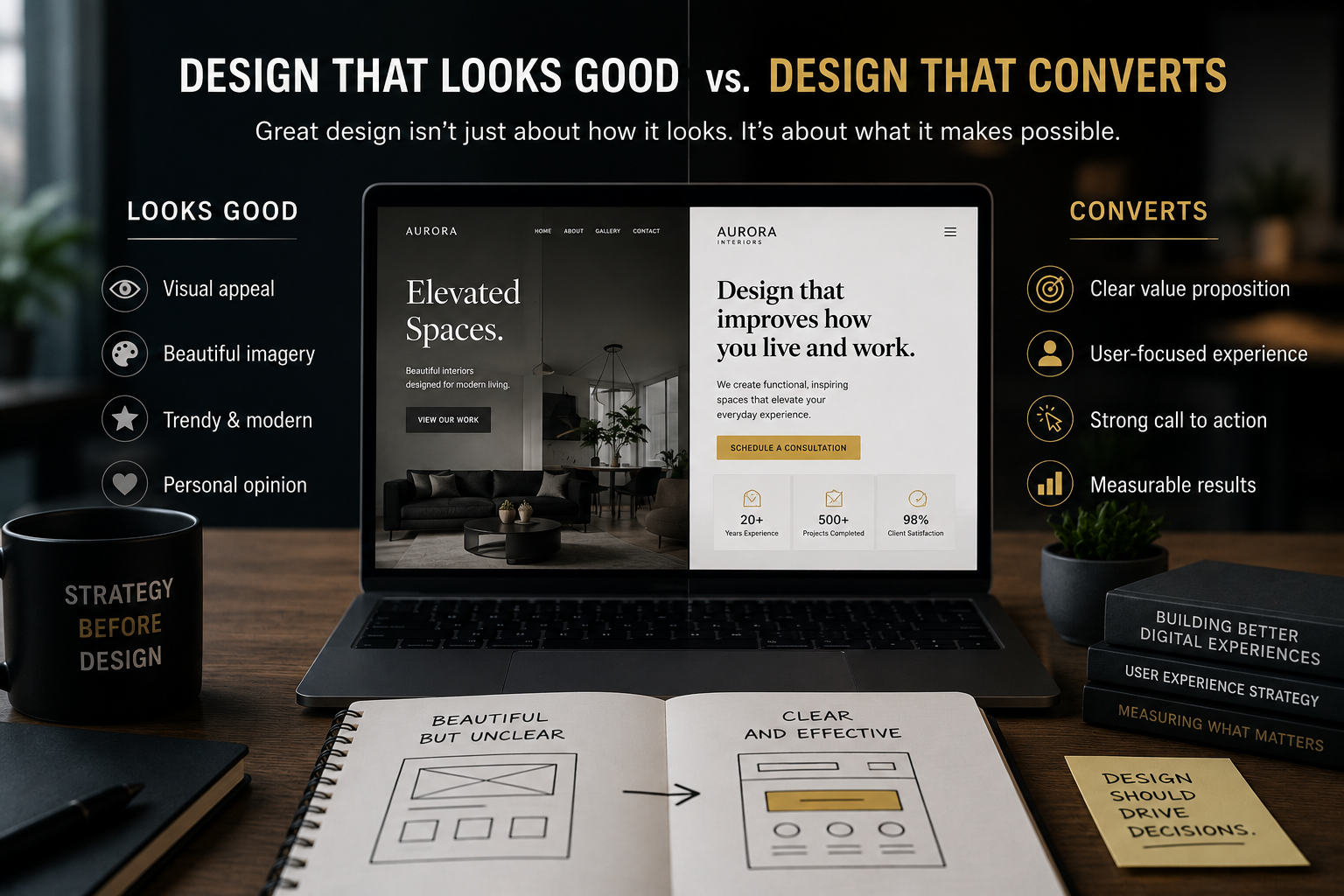
Design has the power to shape perception, build trust, and create emotional connections. Yet one of the most common assumptions in digital experiences is that visual improvement will naturally lead to business improvement. In reality, that relationship is far more complicated.
Some of the most visually impressive websites I've encountered have struggled to generate leads, drive conversions, or support business goals. At the same time, I've seen relatively simple experiences outperform far more sophisticated designs because they made it easier for users to accomplish their objectives. The distinction between appearance and performance is one that organizations often underestimate.
When teams review designs, conversations frequently revolve around personal preference. Stakeholders discuss colors, layouts, imagery, animations, and visual style. While these elements matter, they are rarely the primary factors influencing user behavior. Most visitors arrive with a specific purpose. They want information, reassurance, answers, or solutions. They are evaluating whether the experience helps them move forward, not whether the design wins awards.
Organizations naturally view websites from an internal perspective. They understand their products, services, terminology, and processes, but users do not. As a result, experiences are often designed around how the business thinks rather than how customers behave. The disconnect creates friction. Navigation becomes harder to understand. Messaging becomes less effective. Calls to action become easier to ignore. These issues may seem minor individually, but together they can significantly impact performance.
The most effective digital experiences balance aesthetics and usability. They combine strong visual design with clear communication, intuitive navigation, and purposeful user journeys. Rather than asking whether a design looks better, organizations should ask whether it helps users make decisions more confidently. That shift in perspective changes how success is measured and often leads to stronger business outcomes.
Good design attracts attention, while effective design creates action. The organizations that achieve the strongest results are not necessarily those with the most visually impressive websites. They are the ones that create experiences that help users accomplish their goals while supporting the objectives of the business.
